It has been just over five years since I entered a new season in my walk with God. I had already been walking with Him, but this season felt different. There was more surrender, a greater sensitivity to His voice, and a willingness to follow where He was leading, even when it was uncomfortable.
During this time, I felt led to pray for someone who had hurt me deeply.
It didn’t make sense, and I remember wrestling with God almost daily. I wanted to do His will while my flesh was screaming at me.
If you know me, you’ve probably seen my tattoos and the stories they tell. My tattoos are reminders for me, things I don’t want to forget and truths I need to come back to.
In this season, I wanted something I could see and physically place my hand on when I needed to remind myself to surrender, loosen my grip, and obey God with open hands.
So I started looking for the Hebrew word for obey.
That search led me to:
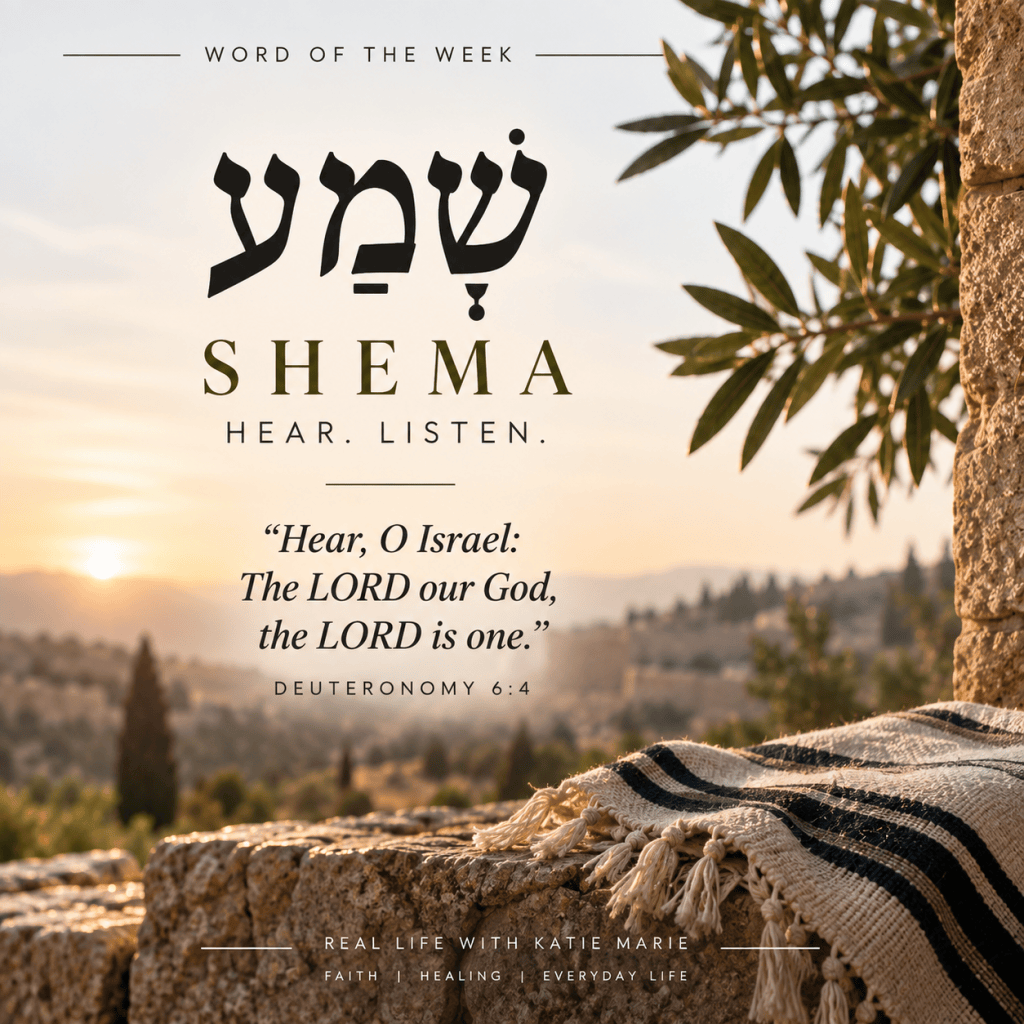
שְׁמַע Shema.
Hear. Listen. Obey.
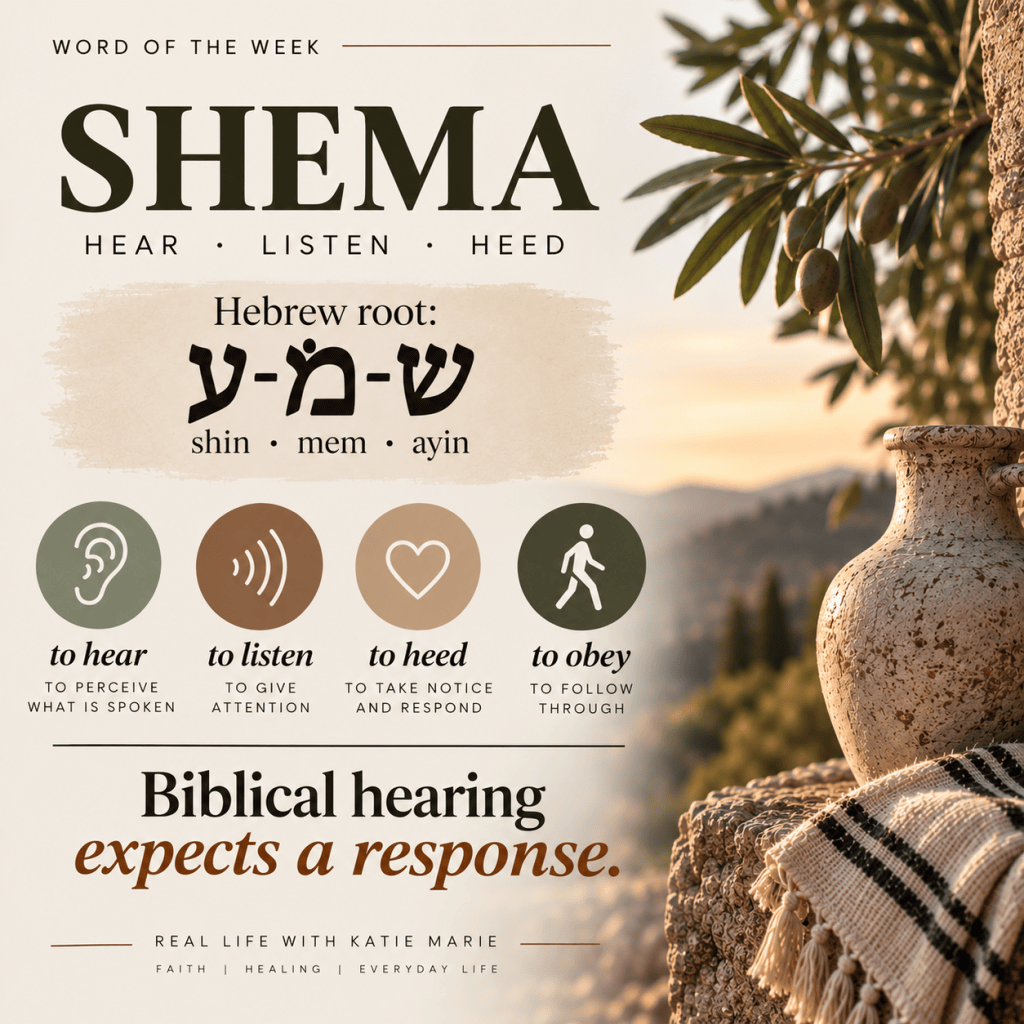
Shema comes from the Hebrew root ש־מ־ע (shin • mem • ayin). The verb means to hear or to listen, and depending on the context, it can also carry the sense of obeying, hearing what has been said and responding to it.
One of the most familiar places we see it is Deuteronomy 6:4:
“Hear, O Israel: The LORD our God, the LORD is one.”
These words became known as the Shema, a central Jewish prayer and declaration of faith.
But God doesn’t tell Israel to hear Him and leave it there. The passage moves into loving God, keeping His words on their hearts, teaching them to their children, and living according to what He has commanded.
They are called to hear what God is saying, and then do something with what they’ve heard.
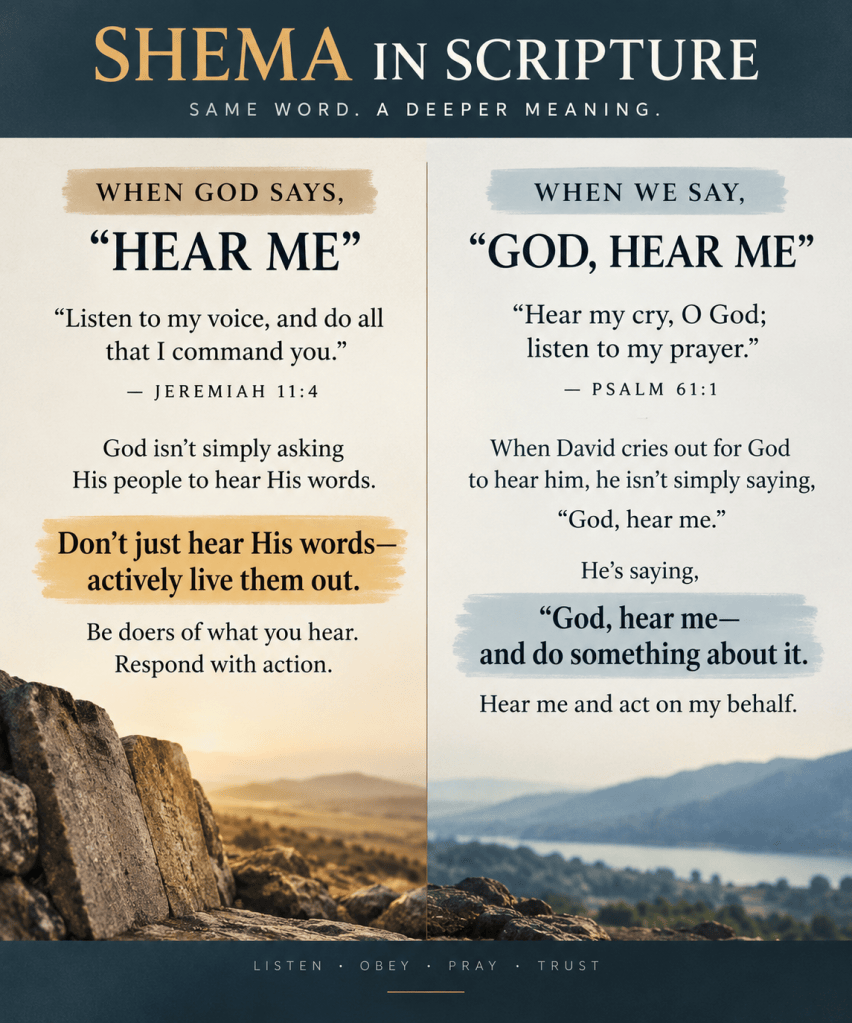
Jeremiah 11:4 makes the connection even clearer:
“Listen to my voice, and do all that I command you.”
Listen.
And do.
I’ve studied psychology and early childhood development, and we talk a lot about active listening. You aren’t simply allowing words to reach your ears. You’re paying attention and responding.
That is what shema began to show me about Scripture.
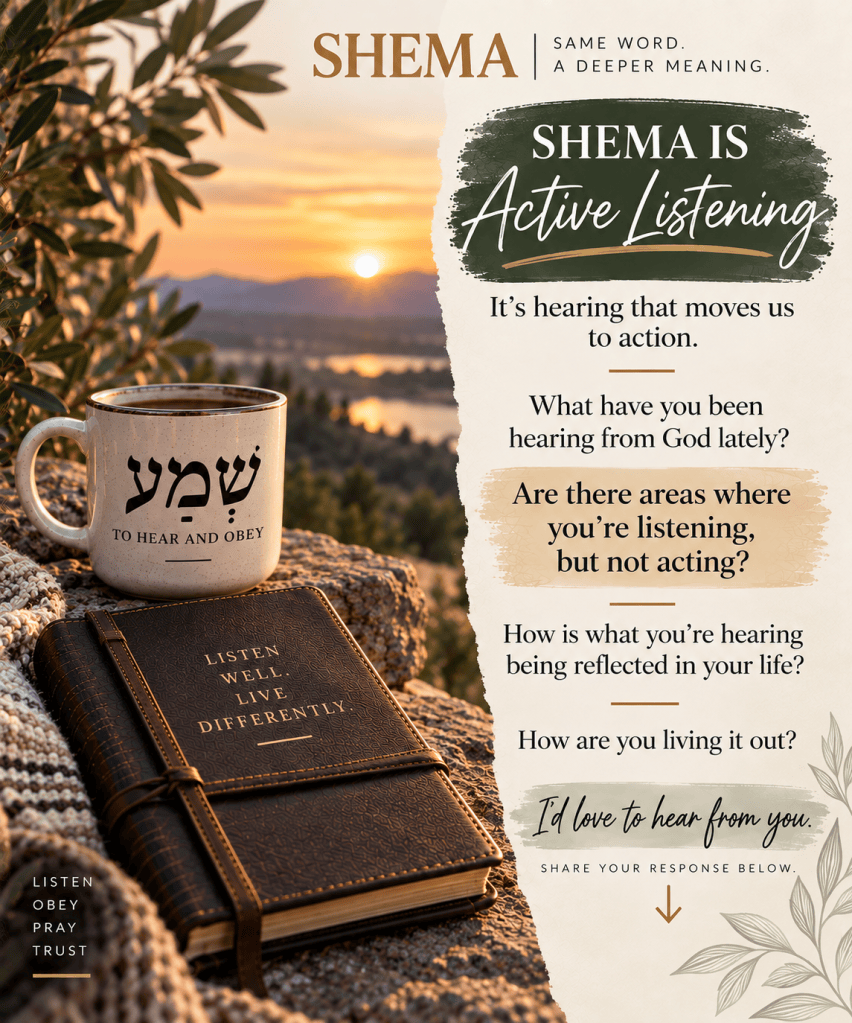
Shema is active listening.
When God says hear, He isn’t simply saying, “Open your ears.”
Listen to what I am telling you.
And then do something with what you’ve heard.
But then I started noticing shema from the other direction.
David cries out:
“Hear, O LORD, my voice when I call; be merciful and answer me.” Psalm 27:7
David isn’t simply asking:
God, can You hear me?
He’s asking God to respond.
And I have found myself crying out the same thing:
God, hear me. Shema. Hear me and act on my behalf.
Hear my cries.
Change my circumstances.
Change something.
And often…
change me.
Because hearing God and obeying what He says requires trust.
My obedience isn’t blind obedience. My obedience comes from trusting the One I’m listening to.
I trust Him enough to obey when I don’t understand, when I don’t know how it will turn out, and when it feels uncomfortable because I’ve seen Him work things out over and over again.
So I wonder:
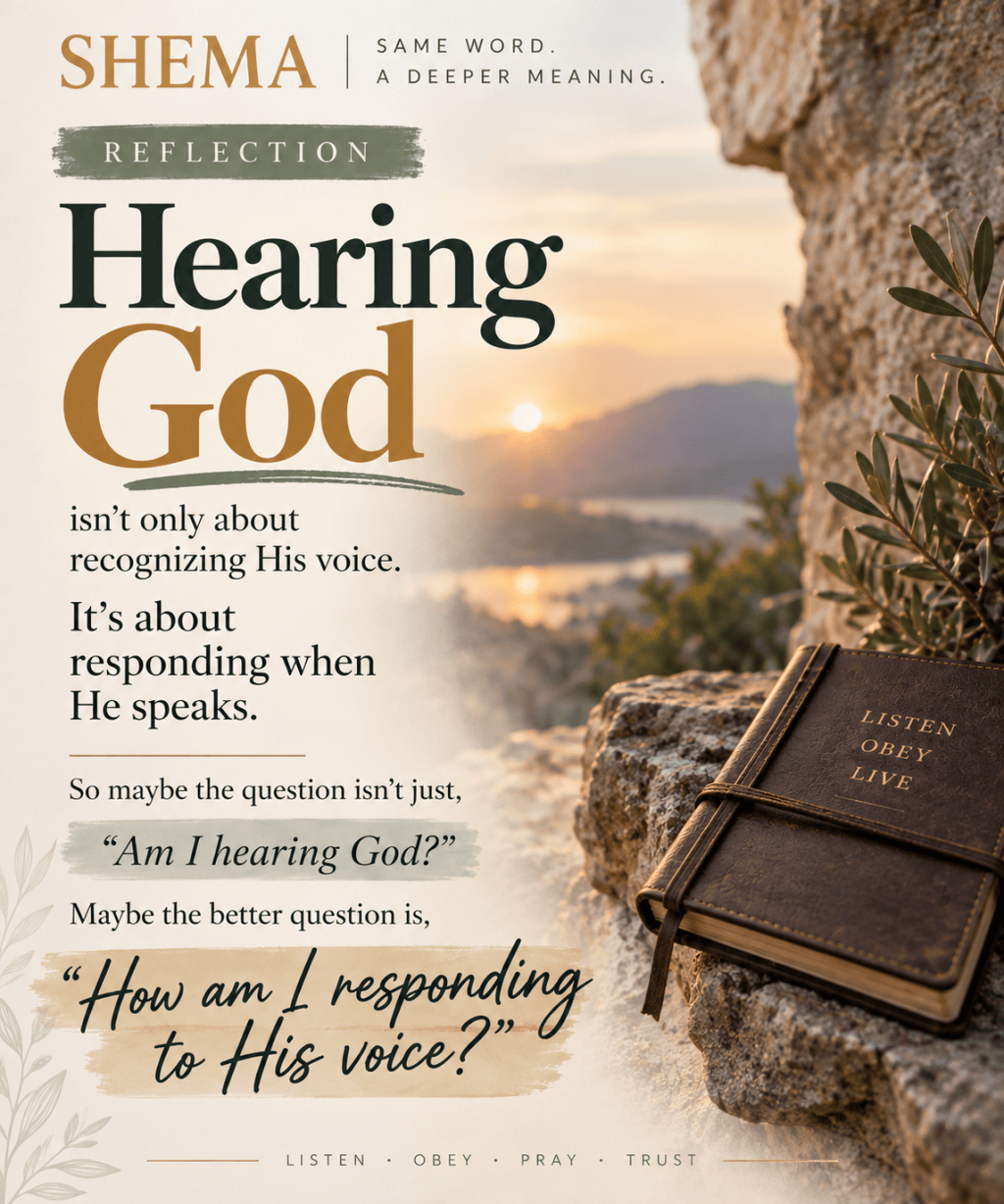
What have you been hearing from God lately?
Are there areas where you’re listening, but not acting?
How is what you’re hearing being reflected in your life?
How are you living it out?
And if you’re the one crying, God, hear me, can you trust Him with how He responds?
I still need the reminder written on my body.
To look down, place my hand over that word, open my hands again, and remember:
Hear Him. Trust Him. Obey Him.
Real life • Real faith • God in the middle of it all • Real Life with Katie Marie




 Real Life With Katie Marie
Leave a comment